
Coal, refinery products, electricity and cement production registered a growth of 14.5 per cent, 8.1 per cent, 10.2 per cent and 11.3 per cent, respectively in November, as per the data released by the Commerce and Industry Ministry.

India Inc on Thursday pitched for lowering income tax burden on common man, increase in capital expenditure, and firm steps to contain food inflation in their nearly two-hour long interaction with finance minister Nirmala Shitharaman ahead of the Union Budget. During pre-Budget consultation with Sitharaman, the industry leaders and associations also urged the government to focus more on infrastructure development with a view to maintaining the economic growth momentum. The industry leaders also laid stress on boosting the MSME (micro, small, and medium enterprises) sector, considered a backbone of the Indian economy and main employment generator.


The headline for corporate profit growth has been very encouraging in the July-September quarter (Q2) of 2023-24 (FY24), with the combined net profit of listed companies up by 38 per cent year-on-year. However, the earnings distribution has been very lopsided, with most of the growth coming from public-sector oil-marketing companies (OMCs), banks, non-bank lenders, automobile (auto) companies, and cement producers. By comparison, companies from information technology services, fast-moving consumer goods (FMCG), retail, and consumer durables were disappointed, experiencing a sharp slowdown in net sales growth and a relatively muted increase in reported net profit.

Production of eight infrastructure sectors expanded by 7.9 per cent in September -- the highest in three months -- on account of better show by coal, fertiliser, cement and electricity segments, according to official data released on Monday. In September last year, the growth rate stood at 5.4 per cent. It was 4.1 per cent in August. The previous high was in June when the output expanded by 13.1 per cent.

We asked colleagues, present and past, to reflect on a man who has made such a difference to their lives and careers. Here it is then, a rich collection of memories that offer enchanting glimpses of the enigmatic Ajit Balakrishnan.

The expansion in September is highest since April, when the core sectors' growth stood at 2.6 per cent.
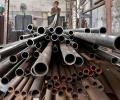
Growth of eight key infrastructure sectors slowed down to 8.2 per cent in June 2023 compared to the year-ago month due to a decline in the production of crude oil, according to the official data released on Monday.

Questions that the state had come to recognise over time but consistently delayed treating seriously because doing so requires an overhaul of perspective and lifestyle, notes Shyam G Menon.

Production of eight infrastructure sectors expanded at a four-month high of 7.8 per cent in January 2023 on better show by coal, fertiliser, steel and electricity segments, according to official data released on Tuesday.

The production growth of eight infrastructure sectors -- coal, crude oil, natural gas, refinery products, fertiliser, steel, cement and electricity -- was 19.3 per cent in May 2022, the data showed. In June, the output of coal, refinery products, fertiliser, cement and electricity rose by 31.1 per cent, 15.1 per cent, 8.2 per cent, 19.4 per cent, and 15.5 per cent, respectively.

The growth of eight key infrastructure sectors slowed down to 4.3 per cent in May 2023 due to a decline in the production of crude oil, natural gas and electricity, according to the data released by the government on Friday. The core sector growth was 19.3 per cent in May 2022, while in April 2023, the key infra sectors recorded a growth rate of 4.3 per cent. During April-May this fiscal, the output growth of these eight sectors slowed down to 4.3 per cent against 14.3 per cent in the year-ago period, the data showed.

'It is advisable to stay away from the markets for now and buy only on a dip.'

Amid intense scrutiny from short-sellers and regulators, Adani group stocks have seen a significant shift in their shareholder base: Relatively opaque foreign portfolio investors (FPIs) have given way to more recognisable investors and broad-based funds. The list of large public shareholders - those directly holding at least 1 per cent - is now dominated by entities, such as the state-owned Life Insurance Corporation (LIC), US-based GQG Partners, Abu Dhabi-based International Holding Company, and Qatar Investment Authority's INQ Holding.
After clocking low monthly growth, India's industrial production is likely to go back to double digit growth in March on the back of fiscal and monetary measures taken in the last few months, a research firm said.

The eight core industries -- fertilisers, cement, steel, electricity, crude oil, coal, petroleum refinery products and natural gas -- have a combined weight of about 38 per cent in the Index of Industrial Production.

The Sittwe deal is more significant than Chabahar in Iran, where India has rights to operate only two terminals and not the port itself.

Production of eight infrastructure sectors rose at a three-month high of 7.4 per cent in December 2022 against 4.1 per cent in the same month of previous year on a better show by coal, fertiliser, steel, and electricity segments, according to the official data released on Tuesday. Crude oil output, however, contracted by 1.2 per cent in December last year. The production of eight key sectors rose by 5.7 per cent in November 2022.

'Like every Budget, this time, too, there is chatter around tinkering with the long-term capital gains tax.' 'Investors may not want to jump into the markets until there is clarity on this front.'

India on Tuesday said cooperation in peaceful uses of nuclear technology is an important pillar of the multifaceted cooperation with Russia, which offered help in building small tropical nuclear power stations.

Department of Economic Affairs secretary Atanu Chakraborty said that equity capital flows have been positive this year.

'Rather than taking a very short-term view on the markets, equity investing should be premised on longer term growth opportunities.'

Despite multiple headwinds at the start of 2023, the Indian markets delivered a strong performance, posting 19-20 per cent growth for the year. Even as new records were set, investor sentiment remains strong going into 2024, given the lower inflation, expectations of steady to lower interest rates, higher economic growth, and strong inflows. However, the overriding concern for most brokerages is valuations.

Modi is among the first world leaders to meet Mahathir, who became the world's oldest elected leader.

The Himachal Pradesh government's Excise and Taxation Department inspected an Adani Group company, scrutinising records and checking the stock at the Adani Wilmar warehouse in Parwanoo, officials said on Thursday. The officials were apparently investigating possible GST violations by the company, a 50:50 joint venture between the Adani conglomerate and Singapore-based Wilmar. The inspection on Wednesday evening in the Congress-run state comes at a time when the group finds itself in the middle of a political row at the Centre, triggered by a scathing report by US-based Hindenburg Research.

The output of eight core infrastructure sectors grew 3.3 per cent in August -- the lowest in nine months -- as against 12.2 per cent in the year-ago period, according to official data released on Friday. The previous low was in November 2021 at 3.2 per cent.
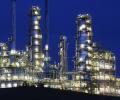
The output of eight core sectors rose 4.4 per cent in September on account of healthy performance by segments like natural gas, refinery products and cement, official data showed on Friday. The eight infrastructure sectors of coal, crude oil, natural gas, refinery products, fertilisers, steel, cement and electricity had grown by 0.6 per cent in September 2020, as per the data released by the commerce and industry ministry.

Aided by robust demand, automobile retail sales in India rose by 11 per cent last year as compared to 2022, dealers' body FADA said on Monday. The overall domestic automobile retail sales stood at 2,38,67,990 units in the 2023 calendar year as compared to 2,14,92,324 units in 2022. Passenger vehicle sales stood at 38,60,268 units last year, up 11 per cent from 34,89,953 units in 2022.
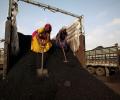
The output of eight core infrastructure sectors contracted to six-month low of 4.5 per cent in July against 9.9 per cent in the year-ago period, according to official data released on Wednesday. The output of these infrastructure sectors expanded by 13.2 per cent in June, 19.3 per cent in May, 9.5 per cent in April, 4.8 per cent in March, 5.9 per cent in February and 4 per cent in January. The production growth of eight infrastructure sectors -- coal, crude oil, natural gas, refinery products, fertiliser, steel, cement and electricity -- was 11.5 per cent in April-July this fiscal against 21.4 per cent a year ago.

Both Putin and Zelenskyy have invited the prime minister to visit Russia and Ukraine respectively after the Lok Sabha elections, sources said, adding they see Modi as a "peacemaker".

Production of eight infrastructure sectors expanded by 3.8 per cent in December 2021 against a 0.4 per cent contraction in the same month last year on better show by coal, cement and refinery products, according to the official data released on Monday. Barring crude oil and steel, all sectors recorded positive growth in December 2021. The core sector industries had grown by 3.4 per cent in November 2021.

The other prominent gainers were Tech Mahindra, HCL Technologies, Wipro, State Bank of India and Larsen & Toubro. Bajaj Finserv, Power Grid, UltraTech Cement and HDFC Bank were among the laggards.
The output of eight core sectors grew by 11.6 per cent in August, mainly due to an uptick in the production of cement, coal, and natural gas, official data showed on Thursday. The eight infrastructure sectors of coal, crude oil, natural gas, refinery products, fertilisers, steel, cement and electricity had contracted by 6.9 per cent in August 2020 due to the nationwide lockdown imposed to control the spread of COVID-19. The eight core industries comprise 40.27 per cent of the weight of items included in the Index of Industrial Production (IIP).

Nirma's tryst with the pharmaceutical space started in 2006 when it acquired the ailing Core Healthcare in a deal reported to be worth Rs 300 crore. The Ahmedabad-based manufacturer of intravenous fluids was subsequently renamed Nirlife. Pharma industry insiders say Nirma, which broke open the detergent market in the 1990s with low prices and massive advertising, tried an encore of the low-price strategy in pharma, but with mixed results.

Among the Sensex firms, HDFC Bank emerged as the biggest loser, falling 4 per cent. JSW Steel, Reliance Industries, UltraTech Cement, Maruti, Tata Steel, Wipro, Tech Mahindra, Bharti Airtel and Larsen & Toubro were the other major laggards. Power Grid, Asian Paints, Sun Pharma, Axis Bank, NTPC, ITC and Infosys were among the gainers.

This period of strong growth not only offers opportunities but also calls for strategic considerations to ensure sustainable development and equitable prosperity in the years to come, suggests Sujan Hajra.
Led by healthy growth in coal, crude oil, fertilisers, cement and electricity production, output of eight core industries grew to a 13-month high of 18.1 per cent in May this year, according to official data released on Thursday. The growth of core infrastructure sectors expanded by 16.4 per cent in the year-ago period and 9.3 per cent in April this year. The last high growth was recorded in April 2021 when it was 62.6 per cent.

'Investors should focus on largecap funds, flexicap funds, business cycle funds, or hybrid-category funds.'

The production of eight infrastructure sectors rose by 7.5 per cent in October on healthy performance by the segments of coal, natural gas, refinery products and cement, official data released on Tuesday showed. The output of eight core sectors of coal, crude oil, natural gas, refinery products, fertilisers, steel, cement and electricity had contracted by 0.5 per cent in October 2020, according to the data released by the commerce and industry ministry. Core sectors' growth stood at 4.5 per cent in September this year.

Movement in the equity market this week will largely be dictated by quarterly earnings of blue-chip firms HDFC Bank and Hindustan Unilever, along with the announcement of WPI inflation data and global trends, analysts said. Trading activity of foreign investors, global oil benchmark Brent crude and rupee-dollar trend would also guide the movement.
